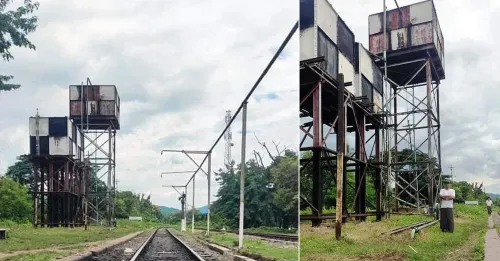
Strange water tank from Nabar station

The strange water tank from Nabar Station

Nabar Reservoir

Today, it stands as the only remaining water tank of its kind in Myanmar. Originally known as the Nabar Reservoir, this historic structure has supported the nation’s railway system for 125 years, from 1895 until 2020. Built during the British colonial era, the reservoir played a vital role in supplying water to steam locomotives operated by Myanmar Railways.

At a time when steam engines required large amounts of water for daily operations, the Nabar Reservoir ensured that trains could travel long distances without interruption. Its strategic location made it an essential refilling point, contributing significantly to the development of transportation and trade across the region.

2026/02/26/ovurl-e7f04200cfe0.webp

One of its most distinctive features was the British-era water treatment system connected to Nabar Creek. This system was designed to filter and store water efficiently, maintaining a steady and reliable supply for railway use. The engineering reflected advanced planning and technical skill for its time.

More than just a water tank, the Nabar Reservoir represents an important piece of Myanmar’s railway heritage and industrial history.

At a time when steam engines required large amounts of water for daily operations, the Nabar Reservoir ensured that trains could travel long distances without interruption. Its strategic location made it an essential refilling point, contributing significantly to the development of transportation and trade across the region.

One of its most distinctive features was the British-era water treatment system connected to Nabar Creek. This system was designed to filter and store water efficiently, maintaining a steady and reliable supply for railway use. The engineering reflected advanced planning and technical skill for its time.

More than just a water tank, the Nabar Reservoir represents an important piece of Myanmar’s railway heritage and industrial history.

Locomotives; Trains; All the stations and staff quarters have been supplied with water for over a hundred years. To this day, an old water pump for old steam locomotives that supply water to many of the colonial-era coal locomotives can still be found near the Nabar railway tower. The British built the water tower with the advantage of the natural environment, where the groundwater was strong and the springs were constantly flowing because of these forest trees.
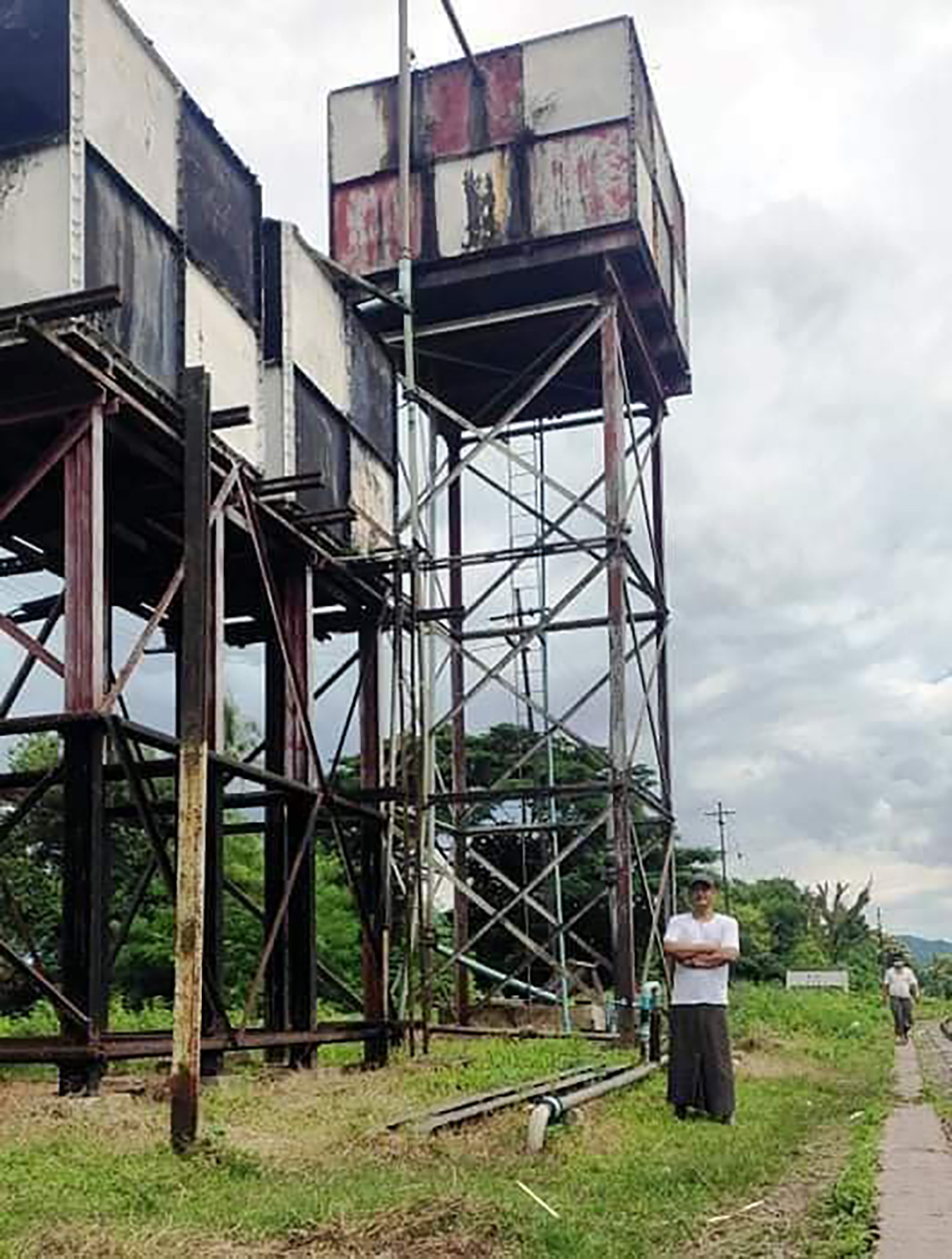
Streams from the Wetlands in the Fascist Range are constantly flowing into the Nabar Creek. Due to these forest trees, the catchment area is good, the groundwater is strong and the springs are constantly flowing. The British built the railway tower.

The key to long-term sustainability is conserving the watershed. When forests remain healthy and intact, they protect the soil, maintain natural water flow, and improve soil fertility for agriculture. Trees help absorb rainfall, reduce erosion, and prevent sudden floods during the rainy season. Because of this natural balance, the villagers of Nabar continue to benefit from improved water management and more stable farming conditions.

A well-preserved watershed supports crop production, replenishes groundwater, and protects communities from extreme weather impacts. However, deforestation in the watershed area has become a serious warning sign for today. When trees are cut down, soil erosion increases, rivers become shallow with sediment, and flooding becomes more severe and unpredictable. Water sources may also dry up more quickly during hot seasons.

Protecting forests is not only about conserving nature; it is about securing livelihoods, food security, and long-term environmental stability for future generations.